Roll With It or Roll Out: The Toilet Paper Orientation War That's Ruining Perfectly Good Relationships
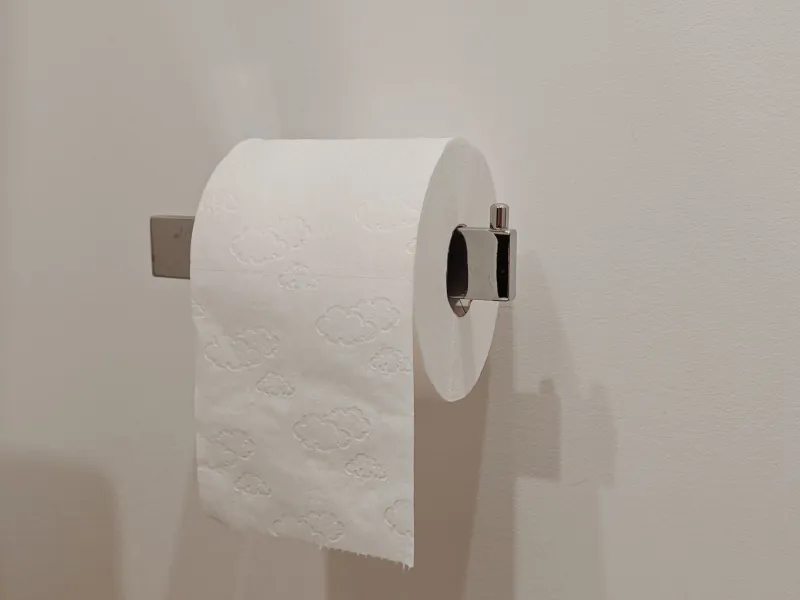
Somewhere in America right now, a person is walking into a bathroom, spotting the toilet paper hung the "wrong" way, and silently seething. Maybe they fix it without saying a word. Maybe they bring it up at dinner. Maybe — and this is where things get interesting — they bring it up every single dinner for the next three years.
Welcome to one of the most absurd, most personal, and most surprisingly loaded debates in modern domestic life. Over or under? It sounds like a coin flip. It is anything but.
Where Did This Even Come From?
Here's something most people don't know: the debate actually has a canonical answer — at least historically. Seth Wheeler, the man who patented perforated toilet paper on a roll back in 1891, included a diagram in his patent filing. In that drawing, the paper feeds from over the top of the roll. So if you're a strict constitutionalist about household items, the "over" camp has a 130-year head start on the argument.
But of course, knowing that doesn't stop anyone. People who hang it under aren't reading 19th-century patent documents before they load a new roll. They're just doing what feels natural — or what their parents did, or what some half-remembered roommate taught them freshman year of college.
And that's kind of the whole thing, isn't it? This isn't really about toilet paper. It's about habit, control, and the unspoken rules we carry into shared spaces.
What Etiquette Experts Actually Say (Yes, This Is Their Job)
Etiquette professionals — real ones, who get paid to think about this — largely side with over. The reasoning is practical: the over position makes it easier to find the end of the roll, reduces the chance of knuckles grazing the wall, and generally looks tidier in a guest bathroom. It's the "hotel standard," which is probably why some people find it insufferably uptight.
The under crowd will tell you that in homes with small kids or curious pets, under is actually the smarter choice — a cat pawing at an under-hung roll does a lot less damage than one going to town on a roll that spins freely from the top. That's not opinion, that's physics.
So yes, there are legitimate arguments on both sides. That won't stop anyone from thinking the other side is completely unhinged.
Real People, Real Arguments, Real Consequences
Ask around and you'll be amazed how fast people get animated about this.
Jamie, 34, from Columbus, Ohio, says she nearly walked out on a first date after noticing the under-hung roll in his apartment bathroom. "I know how that sounds," she admits. "But it told me something about him. I couldn't explain it. We dated for two more months and I was right — total control freak about everything except the toilet paper."
Then there's Marcus, 28, a grad student in Austin who lived with three roommates and instituted what he calls "the roll charter" — a typed, laminated document outlining bathroom expectations, with toilet paper orientation listed first. "People thought I was joking," he says. "I was not joking. We had a house meeting."
And Diane, 61, from suburban New Jersey, confesses that she quietly flips the roll whenever she visits her daughter's house. Every single time. Her daughter has noticed. They have not discussed it. "It's a form of love," Diane insists.
The Psychology Behind the Petty
Psychologists who study personality and preference have actually looked at this — because of course they have. A 2015 survey of over 2,000 people found a loose correlation between dominant personality types and the over preference. People who identified as more assertive or Type A tended to hang over. More easygoing folks leaned under.
Whether that's meaningful science or just a fun fact for your next party is up for debate. But it does suggest something worth sitting with: the way we arrange our bathrooms might say more about us than we'd like to admit.
Or maybe it says nothing at all, and we're all just pattern-seeking creatures desperate to make sense of a chaotic world by picking a side on a toilet paper roll.
The Houseguest Problem
Here's where the debate gets truly thorny: what do you do when you're a guest in someone else's home?
Some people — and you know who you are — will flip the roll to their preferred orientation without a second thought. They consider it a quiet correction, a small gift to the household. Others find this an almost unforgivable invasion, the domestic equivalent of rearranging someone's furniture.
The etiquette consensus is pretty clear: you don't touch the roll. You're a guest. You adapt. But the Squabbles community has weighed in on this one before, and "you adapt" is doing a lot of heavy lifting when someone is genuinely, viscerally bothered by the under hang.
The real question isn't which way is correct. It's whether you're the kind of person who can let it go — and what it means about you if you absolutely cannot.
So Who Wins?
Honestly? Nobody. And everybody.
The over camp has history, etiquette, and hotel chains on their side. The under camp has cats, toddlers, and a certain rebellious charm. And then there's a small but vocal third faction — people who just set the roll on top of the dispenser without putting it on at all — who have somehow managed to unite both sides against a common enemy.
At the end of the day, the toilet paper debate endures not because it matters, but because it's a safe proxy for all the ways we negotiate space, preference, and compromise with the people we live alongside. It's small enough to argue about without real stakes, but personal enough to reveal exactly who we are.
Change the roll. Hang it how you want. Just maybe — maybe — be willing to talk about it instead of stewing in silence for three years.
Or don't. That's what we're here for.