No Ketchup Allowed: How a Hot Dog Topping Became America's Most Divisive Food Rule
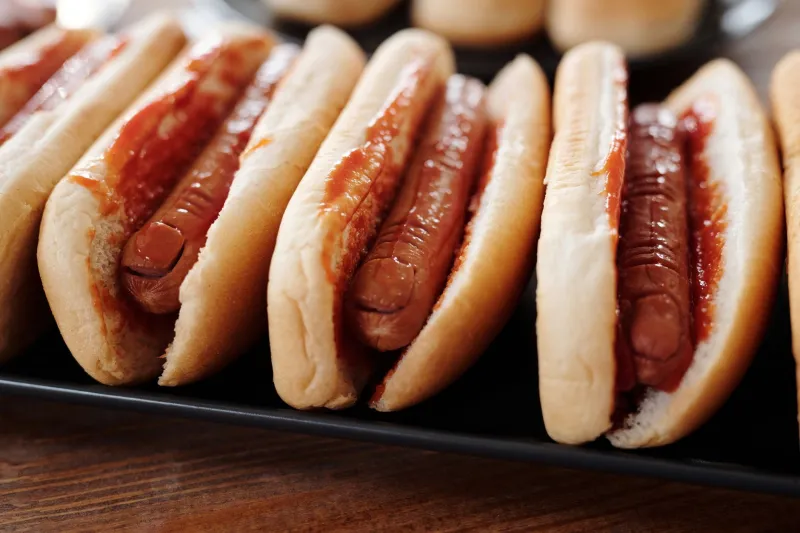
Picture this: You're at a summer cookout somewhere in the Midwest. The grill is going, the sun is out, and someone — a visitor, let's say, someone from out of town — reaches past the mustard, the relish, the sport peppers, and the celery salt, and squeezes a long ribbon of ketchup directly onto their hot dog.
The backyard goes quiet.
This is not an exaggeration. In certain zip codes, this is a genuine social incident.
America has a lot of food opinions. We'll argue about pizza crusts, BBQ regions, and whether ranch dressing belongs on anything other than salad. But the hot dog condiment debate — specifically, the question of ketchup — hits different. It's one of the few food arguments where one side genuinely believes the other is not just wrong, but morally suspect.
The Chicago Doctrine
No city on earth has stronger feelings about hot dog etiquette than Chicago. The Chicago-style hot dog is a fully codified thing: a steamed or simmered all-beef frankfurter on a poppy seed bun, loaded with yellow mustard, neon green relish, fresh white onion, tomato slices, a pickle spear, sport peppers, and a dash of celery salt. It's a construction. An architecture.
And it contains exactly zero ketchup.
This isn't just preference in Chicago — it's doctrine. "Drag it through the garden" is the phrase locals use, referencing the vegetable-heavy topping stack. Ketchup, in this framework, isn't just unnecessary. It's an insult to the craft. Some Chicago hot dog stands have signs that literally say they don't carry ketchup. Others will serve it, but only reluctantly, the way a jazz musician might begrudgingly play "Happy Birthday."
"Ketchup is sweet," explains one Chicago street vendor who's been working the same corner for over a decade. "It drowns everything out. You've got all these flavors working together on that dog, and ketchup just bulldozes all of them. Why would you do that?"
It's a fair point. It's also the kind of point that people from other parts of the country find completely insufferable.
The Rest of America Disagrees
Outside of Chicago — and a few other cities with strong regional dog traditions — ketchup on a hot dog is totally normal. It's what you hand a kid at a baseball game. It's what you grab at a gas station roller grill. It's the default setting for millions of Americans who grew up squirting Heinz on everything and never once questioned it.
In New York, the hot dog conversation is mostly about mustard and onion sauce, but ketchup isn't considered a crime. In the South, you'll find slaw dogs, chili dogs, and a general attitude that you can put whatever you want on your food because it's your food. In California, hot dogs arrive at beachside stands with guacamole, jalapeños, and bacon-wrapped exteriors, and nobody is policing the condiment tray.
"I grew up eating hot dogs with ketchup," says Priya, 31, a food writer based in Atlanta. "I didn't know it was controversial until I visited Chicago in my twenties and a guy at a stand looked at me like I'd asked him to put ranch on sushi. I still think about that look."
What the Professionals Actually Think
Ask professional chefs and you get a more nuanced answer than either camp wants to hear.
Many classically trained chefs will quietly admit that ketchup's sweetness and acidity can actually work well with a fatty, salty hot dog — it's essentially the same logic behind pairing pork with apple sauce or a burger with a sweet relish. The flavor contrast makes sense on paper.
But those same chefs will also tell you that a great hot dog with quality toppings — the kind of layered, thoughtfully assembled dog you'd get from a serious street vendor — genuinely doesn't need ketchup. The flavors are already balanced. Adding ketchup isn't wrong so much as it's unnecessary, like putting syrup on a really good piece of French toast that's already perfectly sweet.
"I don't judge people for using ketchup," says one chef who runs a food truck in Portland, Oregon. "But I'd be lying if I said I wasn't a little sad when they do it without tasting the dog first."
The Gatekeeping Problem
Here's where the Squabbles community really earns its name: at what point does regional food pride cross into straight-up gatekeeping?
There's something genuinely cool about cities having strong culinary identities. The Chicago dog is iconic precisely because it has rules. The same goes for a Sonoran hot dog in Tucson, a Michigan-style coney in Detroit, or a New York dirty-water dog with mustard and kraut. These are cultural artifacts. They mean something.
But the moment you start telling strangers at a cookout that they're eating their food wrong, you've moved from food enthusiasm into food policing — and that's a much less fun place to be. Enjoying a regional tradition is great. Treating it like a citizenship test is exhausting.
Ketchup people aren't ruining hot dogs. They're eating hot dogs. Their hot dogs. With condiments they enjoy. The audacity.
So, Should Ketchup Touch a Hot Dog?
Yes. No. It depends entirely on who you ask, where they're from, and how attached they are to their identity as a hot dog person.
If you're in Chicago, maybe skip the ketchup out of respect — not because you're wrong, but because you're in someone else's house, culturally speaking, and it's a nice gesture. If you're at your own cookout, your own kitchen, your own ballpark seat, put whatever you want on that thing. Ketchup. Sriracha. Cream cheese, if you're from Seattle and feeling bold.
The hot dog is a democratic food. It was invented to be fast, cheap, portable, and adaptable. The idea that it now requires a rulebook is funny if you think about it long enough.
Then again, so is the fact that we're all still arguing about it — passionately, repeatedly, and with the kind of conviction usually reserved for things that actually matter.
That's kind of what we do here. Pull up a seat.