68 Degrees or Die: Inside America's Savage Thermostat Civil War
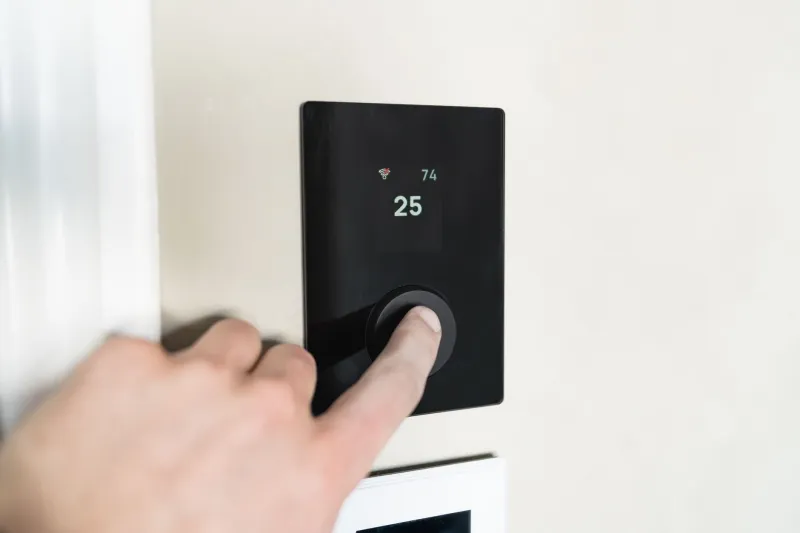
It starts with a quiet click in the hallway. Then someone notices. And suddenly, a perfectly peaceful household becomes a battlefield. The thermostat — that small, innocent-looking rectangle on the wall — might be the single greatest source of domestic conflict in America today. We're talking bigger than the toilet seat debate. Arguably more heated (pun absolutely intended) than any argument about dishes in the sink.
Welcome to Squabbles, where every opinion finds a fight. And trust us — nobody fights quite like people arguing over indoor temperature.
The Science of Why You're Always Wrong (And So Is Everyone Else)
Here's the uncomfortable truth: there's no universal "correct" temperature. Human thermal comfort is shockingly personal, shaped by body mass, metabolic rate, hormonal cycles, age, and even what you ate for lunch. The American Society of Heating, Refrigerating and Air-Conditioning Engineers (yes, ASHRAE — they're real, they're passionate, and they have opinions) suggests a comfort range of roughly 67 to 76°F for most indoor environments. That's a nine-degree window. Nine degrees! And yet somehow, every household manages to find a way to disagree within that range.
Biology plays a bigger role than most people admit. Women, on average, tend to have a higher core body temperature but lose heat from their skin faster than men, meaning they often feel colder in the same environment. Older adults frequently feel chilly because of reduced circulation and lower muscle mass. Heavier individuals generate more body heat. None of this makes anyone "right" — it just means you're all fighting a battle that physiology started long before you did.
And yet. The thermostat wars rage on.
The Office Temperature Situation Is a Special Kind of Chaos
If home thermostat disputes are a skirmish, the office thermostat conflict is full-scale warfare with HR implications.
You know the scene. The office is set to what management calls "a comfortable 72 degrees." Half the staff is in cardigans in July. The other half is fanning themselves with quarterly reports. Someone has a space heater under their desk. Someone else has a personal fan blowing directly at their monitor. Passive-aggressive sticky notes appear near the thermostat. Then the notes get more aggressive. Then facilities management gets involved. It's a whole thing.
Research from Cornell University found that warmer office temperatures — around 77°F — actually led to fewer typing errors and higher productivity compared to the standard cooler office environment. Meanwhile, people who are physically cold tend to make more calculation errors and have shorter attention spans. So the argument that a frigid office keeps people alert? Might be completely backwards.
Tell that to the guy in accounting who keeps it at 66°F and calls it "invigorating."
Couples, Roommates, and the Nightly Temperature Negotiation
Ask any couple that's been together more than a year, and they'll have a thermostat story. It's practically a relationship rite of passage.
The classic setup: one partner runs hot, one runs cold. The hot partner sets the AC to 68°F before bed. The cold partner wakes up at 2 a.m. feeling like they've been stored in a deli cooler. They bump it to 74°F. The hot partner wakes up sweating at 4 a.m., convinced the house is on fire. The cycle repeats until someone sleeps on the couch — not out of anger, but because the guest room has its own vent.
Roommate situations are somehow even more chaotic because there's no shared romantic investment to soften the blow. When your roommate cranks the heat to 78°F in November because they "just can't get warm," and your share of the gas bill arrives, things get real very fast. Squabbles users know this pain — it's one of the most reliably explosive topics whenever someone posts about living situations.
Regional Identity and the Temperature Flex
There's also a distinctly American geographic dimension to this conflict. People from the South will crank the AC to arctic levels in summer as a point of pride — it's practically a cultural value. Meanwhile, folks from the Pacific Northwest, accustomed to mild temperatures, treat anything below 65°F indoors as an emergency. Midwesterners will insist that 70°F is perfectly fine year-round, and they will say this while wearing a flannel in August.
Texans have a particularly intense relationship with air conditioning. It's not a luxury there — it's survival infrastructure. The idea of "toughing it out" without AC in a Texas summer isn't stoic, it's medically inadvisable. So when a Texan visits relatives up north and discovers the thermostat is set to 76°F with no AC running, they experience a specific kind of horror.
New Englanders, meanwhile, have a whole thing about not turning the heat on until at least November, regardless of what the thermometer says outside. It's a matter of regional dignity.
Smart Thermostats: Solution or New Battleground?
You'd think technology might have solved this by now. Smart thermostats like the Nest or Ecobee promise to "learn" your preferences and optimize comfort automatically. And they do — they learn one person's preferences. The person who set up the app. The person whose phone is connected. The person who controls the schedule.
This has introduced an entirely new dimension to the conflict: thermostat gatekeeping. Now instead of physically walking to the wall and turning a dial, one household member can adjust the temperature from their phone while sitting on the couch, and the other person has no idea why it suddenly got warmer. The argument still happens — it's just more mysterious now.
Some couples have reportedly set up separate user profiles on their smart thermostats, creating scheduled temperature compromises that shift throughout the day. Others have installed dual-zone HVAC systems specifically to avoid the argument. That's a five-figure solution to a human communication problem, which is very American of us.
So Who Actually Wins?
Honestly? Nobody. And that's kind of the point.
The thermostat war isn't really about temperature. It's about comfort, control, and the very human desire to feel at ease in your own space. It's about the fact that we share our lives with people who are, at a biological level, experiencing a slightly different reality than we are — and we have to figure out how to meet somewhere in the middle.
Or, more realistically, we complain about it on the internet until someone validates our position.
That's what Squabbles is here for. So go ahead — tell us your number. Tell us why you're right. Tell us about the time your partner set the thermostat to 80°F in June and you genuinely considered moving out.
We've got all day. And the temperature in our office is, frankly, a whole separate article.