Speakerphone in Aisle Seven: The Silent War Being Waged Between You and Every Stranger in the Grocery Store
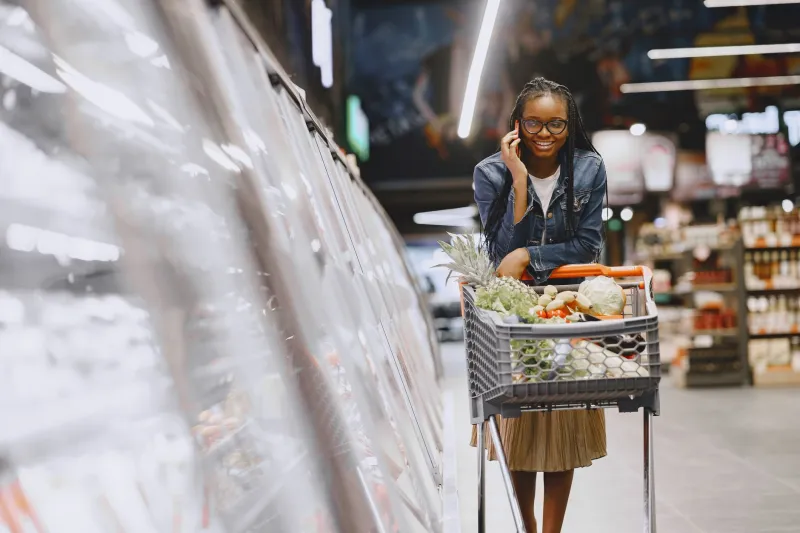
Picture this: you're at your local Kroger, cart half-full, debating between two brands of pasta sauce, fully at peace with the world. Then it happens. Someone rounds the corner, arm extended like they're presenting a trophy, phone on full blast. "No, I told HIM that she said WHAT she said, and I don't care what anybody thinks about it." Volume: maximum. Audience: involuntary.
Welcome to one of the most quietly rage-inducing conflicts of modern American life — the public speakerphone call. It's not dramatic enough to make the news. Nobody gets a restraining order over it. But if you've spent any time in a grocery store, a waiting room, a pharmacy line, or basically any shared human space in the last decade, you already know: this is a thing people are fighting about. Silently. With their eyes.
And over here at Squabbles, we think it's time to stop being quiet about it.
The Speakerphone Enthusiast Has Entered the Chat
Let's be fair to the other side for exactly one paragraph, because they deserve their moment.
For a lot of people, speakerphone isn't rudeness — it's practicality. Hands-free means you can keep shopping, keep moving, keep living your life without pinning a device to your ear like it's 2009. Some folks have hearing issues that make speakerphone genuinely easier to use. Others are just multitaskers who see dead air in a grocery store as wasted productivity. And honestly? If you grew up in a loud household, a big family, or a culture where communal conversation is just the norm, the idea that strangers nearby might be quietly seething over your phone call probably doesn't even register.
There's also a generational split that's impossible to ignore. Younger generations tend to be more comfortable with ambient noise, public self-expression, and the general blurring of private and public life. When you've grown up posting your breakfast, your commute, and your existential crises online for strangers to scroll past, maybe a phone call in the cereal aisle doesn't feel like such a big deal.
And Then There's Everyone Else
For a significant portion of the population, the public speakerphone call lands somewhere between mildly inconsiderate and genuinely unhinged.
Here's the thing about shared spaces: there's an unspoken contract. You agree, collectively and without ever signing anything, to keep your personal volume at a level that doesn't colonize other people's headspace. You don't blast music without headphones. You don't have screaming arguments in the checkout line. And you definitely — definitely — don't put your phone on speaker so that forty-five strangers can hear your brother-in-law explain why he's not coming to Thanksgiving this year.
The speakerphone call breaks that contract. And what makes it especially maddening for the people on the receiving end is that it's so one-sided. You didn't choose to be part of this conversation. You can't leave — you still need your groceries. You're just... stuck. Absorbing someone else's drama about their landlord, their coworker, their weird neighbor, their doctor's appointment results. All of it. Uninvited.
That involuntary intimacy is what tips this from "minor annoyance" into "genuine social grievance" for a lot of people.
Why This Particular Squabble Hits Different
Phone etiquette debates aren't new. People have been complaining about loud cell phone talkers since the flip phone era. But the speakerphone dimension adds something extra to the conflict, and it comes down to visibility.
When someone holds a phone to their ear and talks too loudly, it reads as oblivious. Annoying, sure, but oblivious. When someone extends their arm and broadcasts the call outward — toward the room, toward you — it can feel almost aggressive. Like a declaration that their conversation matters more than your right to exist in peace.
That's probably not what the speakerphone user intends. But perception is doing a lot of heavy lifting in public spaces, and intent rarely gets credit when you're the one standing next to someone's family drama in the frozen food section.
There's also something worth examining about what we expect from public life in America right now. We're increasingly used to curating our own experience — playlists in our ears, algorithms feeding us exactly what we want, the ability to mute, block, and filter on demand. Public spaces are one of the last places where you genuinely cannot control your inputs. And when someone's speakerphone call crashes into that space, it feels like a violation of something we've come to expect: the right to not be subjected to things we didn't choose.
The Rules Nobody Ever Officially Made
Here's where it gets genuinely interesting from a social behavior standpoint: there are no official rules. No signs at the grocery store entrance that say "speakerphone prohibited." No federal statute. No HOA bylaw. Just vibes, norms, and the social pressure of other people's withering glances.
And norms, as it turns out, are not universal. They shift by region, by age group, by community, by context. What feels like basic decency in a quiet suburb might seem uptight and precious in a busy urban neighborhood where noise is just the texture of daily life. What feels totally normal in one family's culture might be genuinely startling to someone from a different background.
This is the part where the debate gets complicated — and where Squabbles earns its name — because "just be considerate" sounds simple until you realize that people have wildly different baselines for what consideration even looks like.
So Where Does That Leave Us?
Somewhere between "you're being too sensitive" and "have some basic self-awareness," probably.
The honest truth is that most people using speakerphone in public aren't doing it to ruin your day. They're doing it because it's convenient, because they didn't think about it, because nobody ever told them it bothered people, or because they genuinely don't share the same social script you're operating from.
But that doesn't mean the people being subjected to it are wrong to feel irritated. Shared spaces work best when everyone makes small sacrifices — keeps the volume down, moves to a less crowded spot for a long call, at least tries to read the room. That's not a lot to ask. It's basically the whole social contract in one sentence.
The real squabble here isn't about speakerphone. It's about whether we still believe in the social contract at all — whether public spaces are places we share, or just places we happen to occupy at the same time.
And based on the number of people silently seething in grocery stores across America right now, that question is very much still open.
Drop your take in the comments. Were you the speakerphone person? Were you the one white-knuckling a can of soup three feet away? We want to hear from both sides — loudly, if necessary.