Hustle Culture vs. Your Pillow: Why a 20-Minute Nap Is Somehow a Political Statement Now
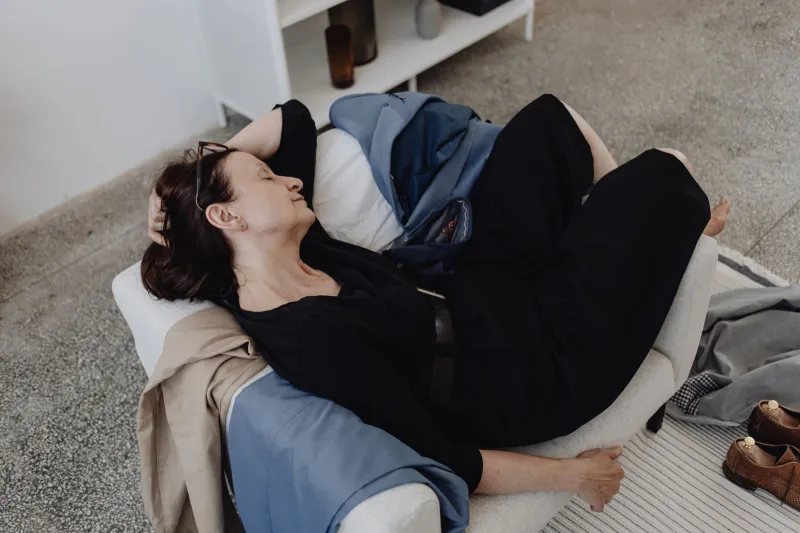
It starts innocently enough. You finish lunch, you hit that 2 p.m. wall, and somewhere in the back of your brain a tiny voice whispers: just lie down for a few minutes. For some people, that whisper is easy to ignore. For others, it's practically gospel. And if you happen to live with, work alongside, or share a social media feed with someone from the opposite camp, congratulations — you've stumbled into one of the most weirdly charged debates in modern American life.
Yes, we're talking about naps. Afternoon naps. And whether taking one makes you a wellness-forward genius or a boneless, ambitionless lump who clearly doesn't want it bad enough.
The Hustle Side of the Pillow
Let's be honest about the culture we're living in. America has spent the better part of three decades glamorizing exhaustion. Sleeping four hours a night used to be something people bragged about at networking events. "I'll sleep when I'm dead" became a motivational quote instead of a cry for help. In that environment, sneaking away from your desk for a midday snooze isn't just unusual — for a lot of people, it feels like a confession.
Take Marcus, a 34-year-old project manager in Chicago who asked us not to use his last name because, as he put it, "my boss would absolutely bring this up in my next performance review." Marcus says he used to nap regularly on weekends but stopped entirely when he moved into a management role. "There's this unspoken rule," he told us. "Leaders don't nap. Leaders push through. If someone on my team found out I was napping at 2 p.m. on a Tuesday, I'd never hear the end of it."
That sentiment isn't unusual. In plenty of American workplaces — especially competitive, results-driven ones — rest is still quietly coded as weakness. You don't clock out mentally in the middle of the day. You caffeinate, you grind, and you save your vulnerability for the therapist you're too busy to actually book.
What the Science People Keep Yelling About
Here's where the other side gets loud, and honestly, they've got receipts. Sleep researchers have been making the case for napping for years, and the data isn't subtle. Studies from NASA, the National Sleep Foundation, and various university labs have consistently shown that a short nap — we're talking 10 to 20 minutes — can sharpen alertness, improve mood, boost memory consolidation, and even reduce the risk of cardiovascular issues over time.
Dr. Sara Mednick, a cognitive neuroscientist at UC Irvine and author of Take a Nap! Change Your Life, has argued that the post-lunch dip in alertness most people experience isn't a character flaw — it's literally baked into human biology. Our circadian rhythms naturally dip in early afternoon. Fighting it with your fifth cup of coffee isn't heroic. It's just... loud.
Countries that have long embraced midday rest — Spain's siesta, Japan's inemuri (the culturally accepted practice of napping in public, even at work) — aren't falling apart. In fact, several of them are doing pretty well, economically speaking. But try explaining that to someone who considers their 70-hour work week a personality trait.
The Partner Problem
If workplace tension around napping is bad, the domestic version is somehow worse. Because at least at the office there's a power structure that explains the judgment. At home, it's just two people who love each other and have wildly incompatible opinions about what 3 p.m. on a Saturday should look like.
Jessica, a 29-year-old teacher from Austin, says her partner views her weekend naps as a "passive-aggressive move." "He thinks if I'm napping, I'm avoiding chores or avoiding him," she said. "But I'm genuinely tired. Teaching is exhausting. I need 25 minutes of unconsciousness to be a functioning human being for the rest of the day." Her partner, she says, sees napping as "giving up on the day" — a phrase she has come to find deeply offensive.
This is more common than you'd think. On forums across the internet, including plenty of threads right here on Squabbles, people regularly air this exact grievance. One side sees napping as an act of restoration. The other sees it as abandonment — of plans, of productivity, of the implicit social contract that says weekends should be experienced, not slept through.
The Guilt Is Its Own Exhausting Problem
What makes this debate particularly thorny is that even people who believe in napping often can't fully enjoy one. The guilt kicks in before the REM cycle does. There's the mental checklist of everything that isn't getting done. The awareness that someone, somewhere, is out there hustling while you're horizontal. The creeping suspicion that your nap is going to be the thing that keeps you from reaching your goals.
That psychological weight is real, and it says a lot more about American productivity culture than it does about any individual's laziness. We've collectively decided that busyness equals virtue, and rest is something you earn rather than something you need. Which means even when your body is begging for a break, your brain is filing a formal objection.
So Who's Actually Right?
Here's the maddening truth: both sides are arguing past each other because they're measuring different things. The anti-nap crowd is measuring output, optics, and social signaling. The pro-nap crowd is measuring energy, cognitive function, and long-term health. Neither metric is wrong — they're just answering different questions.
What does seem clear is that the stigma around rest in this country is doing real damage. Burnout rates are climbing. Sleep deprivation is practically an epidemic. And yet the cultural reflex is still to treat exhaustion as a badge of honor and recovery as a moral failing.
Maybe the real debate isn't "should adults nap?" Maybe it's "why are we so committed to suffering through the afternoon when we don't have to?"
That's the squabble worth having. And you can have it right after you wake up.