Take Your Shoes Off — or Take the Consequences: The Front Door Standoff Tearing Households Apart
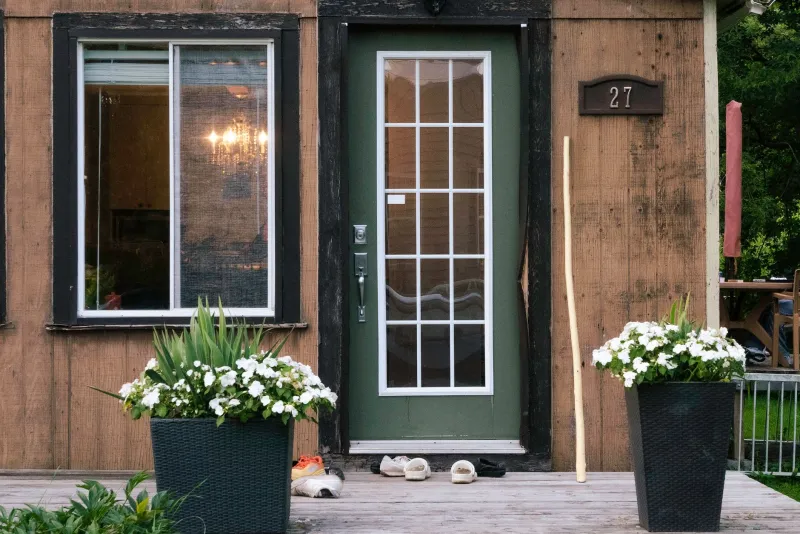
There's a moment that plays out in homes across America every single day. A guest steps through the front door, shoes still firmly on their feet, and the host quietly dies inside. Or alternatively — a guest bends down to unlace their sneakers and the host waves them off with an awkward "oh no, you really don't have to do that," while secretly hoping they do it anyway.
Welcome to the front door standoff. It's low-stakes, weirdly personal, and somehow capable of generating genuine resentment between people who otherwise love each other.
Here at Squabbles, we live for exactly this kind of thing.
Where Did This Even Come From?
The shoe-removal habit isn't random. In many Asian, Middle Eastern, and Scandinavian cultures, taking off shoes before entering a home is deeply embedded — a sign of respect, cleanliness, and a clear boundary between the outside world and the private sanctuary of the household. Japanese homes have a designated entryway called the genkan specifically designed for this transition. It's not a preference. It's architecture.
In a lot of American households — particularly those with roots in these traditions — the rule arrived with the family and never left. But for plenty of other Americans, especially those from backgrounds where homes were more casual and open, the idea of being asked to remove your shoes at someone else's door can feel weirdly formal. Almost like a test.
And that tension? It's very much alive in 2024.
The Case for Shoes Off (It's Not Just About Clean Floors)
Let's be real — the pro-removal crowd has some solid ground to stand on. Studies have found that the soles of shoes can carry an alarming amount of bacteria, including E. coli, picked up from public restrooms, parking lots, and sidewalks. One University of Arizona study found more than 400,000 units of bacteria on the outside of a typical shoe. That's not a fun number to think about while you're sitting on your living room rug.
For families with young kids who crawl or play on the floor, this isn't abstract. It's a genuine hygiene concern. Interior designers and professional cleaners will also tell you — without hesitation — that enforcing a no-shoe policy dramatically extends the life of hardwood floors, carpets, and tile grout. It's not just cleanliness. It's maintenance.
"The difference in floor wear between a shoes-on and shoes-off household is significant," says one residential cleaning professional who works across the Chicago suburbs. "Especially with carpet. You can just tell."
The Case for Keeping Your Shoes On (Yes, There Is One)
Here's where it gets a little more complicated. For some guests, removing shoes isn't just inconvenient — it's uncomfortable in a way that's hard to articulate without sounding defensive.
Consider someone who has a medical condition affecting their feet, or someone who relies on orthotics built into their footwear for daily pain management. Consider the guest who showed up in dress shoes for a dinner party and is now standing in mismatched socks with a hole in the toe, feeling suddenly underdressed and exposed. Or the older relative who genuinely struggles to bend down and remove shoes without assistance.
There's also a hospitality argument. Some hosts — and etiquette writers have gone back and forth on this for years — believe that making a guest feel physically uncomfortable the moment they arrive is a rough way to start an evening. The home is supposed to be welcoming. Demanding someone change their physical state before they've even said hello can, depending on the delivery, feel more like a security checkpoint than a warm invitation.
When House Rules Collide With New Relationships
Few scenarios surface this conflict more reliably than the early stages of a relationship. You're visiting your partner's place for the first time. You step inside. There's a neat row of shoes by the door. No one says anything. Do you take yours off? Do you wait to be asked? Do you just... keep walking?
This exact situation generates a surprising amount of online debate. Threads on Reddit and various parenting forums regularly erupt over whether a partner's family is being "controlling" by enforcing shoe removal, or whether a guest is being "disrespectful" by not picking up on obvious visual cues.
"My boyfriend's mom has a no-shoes rule and she's never once directly said it," one user posted in a popular relationship forum. "She just stares at your feet until you figure it out. It took me three visits."
That passive enforcement style is its own whole conversation. Some households post a small sign. Some have a dedicated shoe rack that does all the communicating. Others rely entirely on social osmosis — the assumption that a guest will notice everyone else's bare feet and act accordingly. When that system breaks down, things get uncomfortable fast.
The Holiday Visit Flashpoint
Thanksgiving. Christmas. Easter. These are the moments when shoe policy disagreements reach peak drama. Extended family arrives. Grandma walks straight to the couch in her outdoor shoes. The host says nothing but sends a look to their partner that could strip paint. The partner pretends not to see it. Someone brings it up later. A whole thing happens.
For households with mixed cultural backgrounds — say, a Japanese-American spouse and a Southern family that has never once considered removing shoes indoors — the holidays can turn the front door into a genuine negotiation zone. And not everyone handles that negotiation gracefully.
Family therapists note that these small domestic rules often carry a lot of symbolic weight. Asking someone to follow your house rules isn't just about cleanliness. It's about whether they respect your space. And refusing — or just ignoring the expectation — can feel like a statement, even when it absolutely wasn't meant as one.
So Who's Right?
Honestly? Both camps have legitimate points, and that's exactly why this debate never dies. Cleanliness and floor preservation are real. So is guest comfort and accessibility. The answer probably lives somewhere in how you communicate the expectation — clearly, kindly, and ideally before someone is already halfway across your living room in muddy boots.
Providing clean guest slippers (a common practice in many European and Asian households) is one practical middle ground. Giving guests a heads-up before they arrive is another. And if you're the guest? When in doubt, look at the floor near the door. The shoes will tell you everything you need to know.
This is one of those squabbles that sounds minor until you're in the middle of it — and then it feels like a referendum on everything. Which is, honestly, kind of our whole thing.