Reply Now or Make Them Wait: The Text Response Time Debate That Says Everything About You
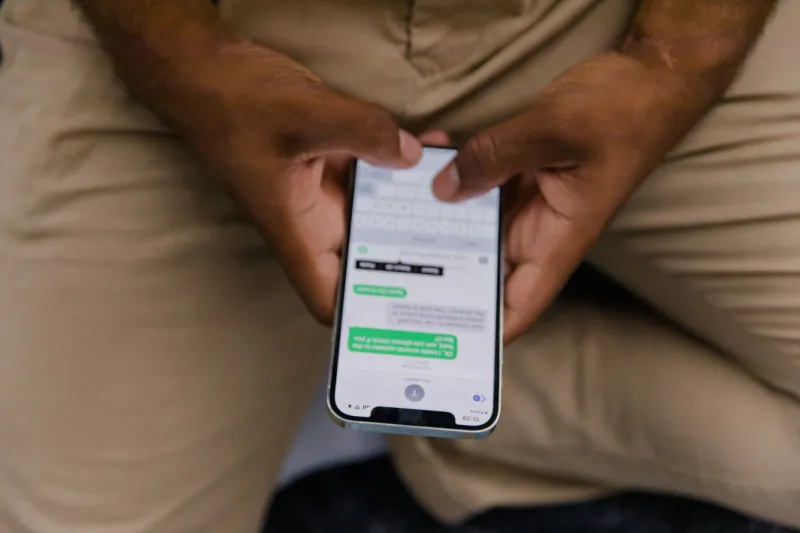
Somewhere between the invention of the smartphone and right now, answering a text message became a deeply political act. It used to be simple: someone calls, you pick up or you don't. Someone texts, you reply when you get a chance. But somewhere along the way, "when you get a chance" turned into a minefield of perceived slights, power plays, and relationship-ending misunderstandings.
How fast you respond to a text — or how long you don't — has become one of the most loaded signals in modern American social life. And people have feelings. Very strong ones.
The Instant Responders and Why They're Tired of Being Called Desperate
Let's start with the folks who reply fast. Like, within seconds fast. They see the message, they respond, they move on. Simple. Logical. Respectful of another person's time.
Except, apparently, that makes you look "too available."
This is the part where a lot of people lose their minds. The idea that promptly acknowledging a human being who reached out to you somehow signals weakness or desperation is one of the stranger social myths that has taken root in the last decade. And yet here we are, with grown adults strategically staring at a text for twenty minutes before replying so they don't seem "clingy."
Quick responders tend to argue — reasonably — that they reply fast because they're organized, attentive, and actually respect the people they're talking to. Their phone is in their hand, they saw the message, they answered. That's it. There's no subtext. There's no deeper meaning. They're just not playing games.
But the internet has decided otherwise, and the court of social opinion is not always a fair one.
The Slow Responders and Their Extremely Confident Justifications
On the other side of this debate, you've got the people who treat a text reply like a fine wine — it needs time to breathe. These are the folks who will read your message, set their phone face-down, live their entire life for four hours, and then casually respond as if no time has passed at all.
Ask them about it and they'll tell you they're busy. And sometimes that's genuinely true. People have jobs, kids, commutes, and approximately 47 things happening simultaneously on any given Tuesday. Not everyone can or should be expected to drop everything the second a notification pops up.
But — and this is where the squabbling really starts — some slow responders are not busy. They are strategically slow. They have read the message, processed the message, composed a response in their head, and then made a conscious decision to wait. Because in their world, waiting communicates value. It signals that you're not sitting around waiting for their reply. It says, without saying anything at all, I have a life and you're not the center of it.
Is that a power move or is it just rude? Depends entirely on who you ask.
Read Receipts: The Feature Nobody Asked to Have Feelings About
And then there's the thing that made all of this so much worse: read receipts.
Apple introduced them to iMessage, and the world has not recovered. The little "Read 4:47 PM" notification sitting beneath your carefully crafted text while the other person says absolutely nothing is, for many people, a form of low-grade psychological warfare.
You know they saw it. They know you know they saw it. And yet — silence.
Read receipts turned a private decision (when to reply) into a public performance. Suddenly, not replying wasn't neutral anymore. It was a statement. Whether intentional or not, leaving someone on read after they can see you've opened it carries a weight that a simple missed notification never did.
Some people have solved this by turning read receipts off entirely, which, depending on your social circle, is either a completely sane boundary or a declaration of emotional unavailability. There is apparently no middle ground.
Does Age Actually Change Everything Here?
Generationally, this debate cuts in some interesting directions. Older millennials and Gen X folks largely grew up with the understanding that not responding immediately was just... normal. You were away from your phone. You were at dinner. You were doing something else. Nobody expected instant access.
Younger millennials and Gen Z, on the other hand, came of age in a world where the phone is always present, always charged, always within arm's reach. The expectation of availability is baked into their communication style in a way it simply wasn't for previous generations.
This creates some genuinely funny cross-generational friction. A 38-year-old taking four hours to reply might not think twice about it. Their 24-year-old coworker, meanwhile, is quietly convinced they're being iced out.
And in romantic relationships? This gap gets even messier. Couples with different texting styles frequently cite response time as a source of real tension — not because either person is objectively wrong, but because they're operating with completely different internal rulebooks that nobody ever bothered to share out loud.
So What's the Actual Rule?
Here's the uncomfortable truth: there isn't one. And that's exactly what makes this such fertile ground for squabbling.
Response time expectations are wildly personal, deeply contextual, and almost never explicitly discussed. They're assumed. And when your assumption doesn't match someone else's assumption, you get conflict without either party fully understanding why they're annoyed.
A few things do seem to hold up across most camps, though. Context matters — a casual "lol same" conversation has different expectations than a logistical exchange about picking someone up from the airport. Relationship closeness matters — your best friend probably gets a faster reply than your dentist's receptionist. And the content of the message matters — "hey what's up" sits in a different queue than "we need to talk."
Beyond those basics, though, you're largely on your own, navigating an unwritten social contract that everyone swears they understand and almost nobody actually agrees on.
The Squabbles Verdict
Honestly? Both sides have a point, which is annoying for everyone involved.
Instant responders aren't desperate — they're just communicators who don't think replying to a text should come with a mandatory waiting period. Slow responders aren't always playing games — sometimes they really are just living their life and getting to it when they can.
The real problem isn't response time. It's the complete lack of conversation about expectations between the people involved. And that conversation? Nobody wants to have it, because having it feels somehow more vulnerable than the texting itself.
So instead, we all sit here, refreshing our inboxes, reading into every delay, and arguing about it on the internet.
Which, honestly, is pretty on brand for all of us.