Plastic Wrap, Foil, or Just Slam a Lid On It: What Your Leftover Storage Method Says About Who You Are as a Person
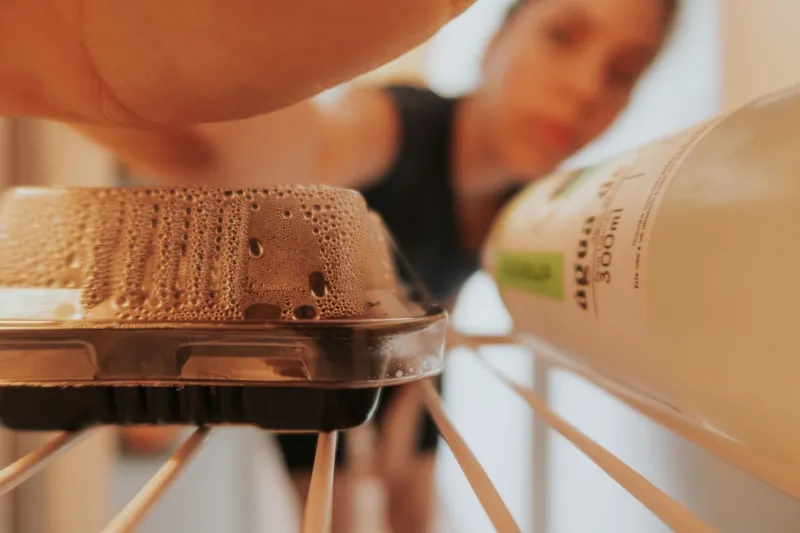
The Tupperware debate gets a lot of press. Which containers you own, how many you have, whether they're actually matching — sure, fine, that's a whole thing. But we've been sleeping on the real conversation, which happens before anything goes into a container. It happens at the counter, after dinner, when you're staring at a bowl of leftover chili and you have to make a decision.
Plastic wrap? A sheet of foil? Or do you have an actual lid for this thing?
This is not a small question. This is, it turns out, a window directly into your soul.
The Three Factions, Defined
Before we get into the psychographics, let's acknowledge that these camps are real and they are committed.
The Plastic Wrap People are flexible thinkers. Literally — they appreciate that cling wrap molds to whatever shape it encounters, no container matching required. Got a weirdly shaped bowl from your grandmother? Doesn't matter. Plastic wrap doesn't care about your bowl geometry. Plastic wrap adapts. Plastic wrap provides. The downside, of course, is that plastic wrap is a single-use product, it's increasingly hard to feel good about environmentally, and getting it off the roll without it folding onto itself is a special kind of frustration that has ruined more than one otherwise pleasant evening.
The Foil Faithful are a different breed. Foil people tend to be pragmatists with a slight flair for drama — they like the way foil looks in the fridge, all silver and serious, like whatever's underneath is important enough to be preserved with gravitas. Foil is also reusable in a pinch, which gives it a slight environmental edge over plastic wrap in the minds of its devotees. It doesn't cling the way plastic wrap does, which means it requires a certain confident technique to seal properly. Foil people have that technique. They'll tell you about it.
The Lid Loyalists are, frankly, the most organized people in any given household. They have containers with matching lids. They know where those lids are. They may have labeled the shelves where those lids live. Lid people are not necessarily more virtuous than the other camps — but they do tend to have a system, and they tend to feel mildly superior about it, which is either charming or exhausting depending on how you feel about systems.
The Generational Fault Lines
Talk to enough people about this and patterns emerge quickly.
Boomers and older Gen Xers skew heavily foil. This tracks historically — aluminum foil became a kitchen staple in American homes in the mid-20th century and was, for a long time, the default answer to the "how do I cover this" question. It's durable, it's familiar, and it carries a certain retro credibility. Your grandmother covered her casserole dish with foil before it went in the oven and before it went in the fridge, and that logic has been passed down accordingly.
Millennials are the plastic wrap generation, broadly speaking — they came up in households that had both options and often defaulted to the clingy stuff for its perceived ease. But millennials are also the generation currently experiencing the most acute environmental guilt about single-use plastics, which means a significant portion of them are in an active internal conflict every time they reach for the box.
"I know it's bad," says Priya, a 33-year-old marketing manager from Chicago. "I know. I have reusable beeswax wrap. It's in a drawer. I own it. But when it's 9 PM and I just want to cover the leftover rice and go watch TV, I'm reaching for the Saran Wrap and I'm going to feel vaguely terrible about it until I fall asleep."
Gen Z, meanwhile, is driving the lid revival. Younger consumers have shown stronger preference for reusable container systems — partly environmental, partly aesthetic (matching glass containers photograph beautifully for the fridge organization content that has become its own corner of social media), and partly because they simply grew up in a world where the conversation about single-use plastics was already well underway.
Regional Flavors in the Storage Wars
Geography adds another layer to this argument, as it tends to do with most food-adjacent debates in America.
In the South, where hospitality culture means there's often more food being transported, shared, and gifted between households, foil reigns. A foil-covered dish traveling to a neighbor's house or a church potluck is a cultural institution. You're not bringing your good container to someone else's house — that's how containers go missing — so foil is the practical, respectful choice.
In the Northeast, where apartment kitchens are small and counter space is precious, plastic wrap's space-saving flexibility has a devoted following. You don't have room for a full collection of matching containers in a 400-square-foot studio. You have room for a box of plastic wrap.
In the Pacific Northwest and parts of the Mountain West, where environmental consciousness runs particularly high, the lid-and-container system has become almost a point of identity. Reusable, stackable, ideally glass — the fridge as a reflection of values.
What the Experts Actually Think
Food safety professionals will tell you, somewhat boringly, that a proper airtight seal is what matters most — and that all three methods, executed correctly, can achieve adequate coverage for standard refrigerator storage timelines. The real enemy of leftover longevity isn't your choice of covering material; it's inadequate sealing and temperature inconsistency.
But "all three methods are basically fine" is not a satisfying answer, and nobody comes to Squabbles for satisfaction. They come for the argument.
Nutritionists will point out that certain foods — anything acidic, like tomato-based dishes — can react with aluminum foil over extended storage, which gives the lid people a genuine technical point to score. Plastic wrap, meanwhile, has faced scrutiny over chemical leaching concerns when it comes into contact with fatty or hot foods. And lids, of course, require that you actually have a matching lid, which is the single greatest assumption in all of American kitchen life.
The Deeper Question Nobody's Asking
Here's what the leftover storage debate is really about, underneath all the foil and cling film: it's about your relationship with the future.
Folks who invest in proper container systems are, in a small but meaningful way, optimists. They believe the leftovers will be eaten. They're planning for Tuesday's lunch. They're organized enough to retrieve the container, retrieve the lid, and act like a person who has their life together.
Plastic wrap people are living in the present. The food needs to be covered right now. We'll figure out Tuesday when Tuesday gets here.
Foil people are pragmatists who've made their peace with imperfection. The food is covered. It's fine. Stop overthinking it.
None of them are wrong. All of them are a little bit insufferable about it. And that is, ultimately, what makes this community worth showing up to.
So which camp are you in? And more importantly — have you ever silently judged someone else's fridge because of it? Because we know you have.