The Exit Button Is Right There: Why Leaving a Group Chat Has Become an Act of War
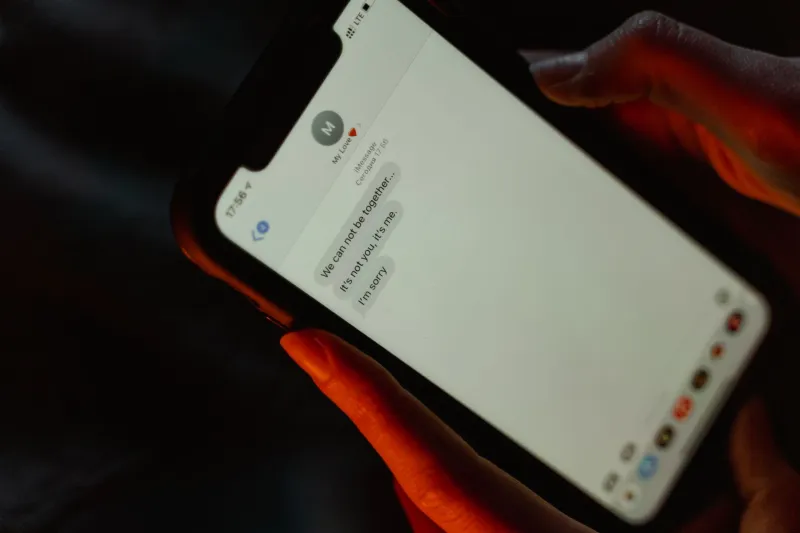
Somewhere between the invention of iMessage and right now, a simple feature became a social minefield. The group chat — that chaotic, notification-heavy corner of your phone where inside jokes go to die and someone's always trying to coordinate something nobody actually wants to do — has evolved into an unexpected emotional battleground. And the most explosive thing you can do in one isn't say something offensive. It's say nothing. Or worse: leave.
The group chat exit has become the digital equivalent of walking out of a room mid-conversation. It communicates something, even when you intend it to communicate nothing. And people, it turns out, have feelings about it.
The Notification That Ends Friendships
If you're an iPhone user, you know the specific dread of seeing "[Name] left the group." It sits there in gray text, quiet and devastating, like a breakup note that everyone in the thread can read simultaneously. In Android group chats, you might not even get that notification — the person just vanishes, which is somehow worse because now you have to discover the absence.
Alex, a 27-year-old graphic designer from Atlanta, found out the hard way that exiting a group chat isn't a neutral act. "I left a college friend group chat because it had been dead for like eight months and I was trying to clean up my phone," she told us. "Three days later I got a text from someone in the group asking if I was mad at everyone. I wasn't. I just had too many notifications." What followed, she said, was a two-week spiral of explanations, apologies, and one person who "never really got over it."
This is not an isolated incident. Browse any corner of the internet where people discuss relationships and communication — and yes, Squabbles has had more than a few threads on exactly this topic — and you'll find dozens of variations on the same story. Someone leaves a group chat for mundane, practical reasons. Someone else interprets it as a statement. Chaos ensues.
Generational Fault Lines
Part of what makes group chat etiquette so contentious is that different generations are essentially playing by completely different rulebooks — and nobody handed out copies.
For older millennials and Gen X users, the group chat is often a functional tool. It exists to solve a problem: plan a trip, coordinate a birthday dinner, share information with multiple people at once. When the problem is solved, the chat has served its purpose. Leaving it feels logical, even tidy.
For younger millennials and Gen Z, the group chat is more of a social space — an ongoing ambient connection that signals belonging. Leaving isn't just closing an app. It's withdrawing from a relationship. The chat is the relationship, in a way. So when someone exits, it registers as rejection, even if that's the last thing the person intended.
"My younger sister thinks I'm always mad at her because I leave group chats," said Derek, a 38-year-old from Phoenix. "I'm not mad. I just don't want 47 notifications about a restaurant we already picked. She thinks it's personal. I think it's sanity."
The Lurker Problem
But leaving isn't the only way to cause drama. Staying — and saying absolutely nothing — has its own complicated etiquette implications.
The group chat lurker is a well-documented phenomenon. They're in the chat. They see every message (the little "read" receipts betray them). They never respond. They never react. They exist in the thread like a ghost who's technically present but contributing nothing to the haunting.
For active participants, this can feel bizarre or even rude. You're pouring your personality into this space — your memes, your complaints, your voice memos that nobody asked for — and someone is just watching. Silently. Always.
Some lurkers have perfectly good reasons. They're introverted. They don't feel like the conversation requires their input. They're busy. They have anxiety about saying the wrong thing in a group setting, which is a real and valid experience that more people should probably acknowledge.
Others are lurking because they genuinely don't care about the chat and are waiting for a socially acceptable moment to exit without it becoming a thing. Which is its own kind of exhausting.
Do You Actually Owe Anyone Your Attention?
This is the question that sits at the center of the whole debate, and it's messier than it looks.
On one hand, communication is a two-way street. If someone adds you to a group chat, there's an implicit expectation that you're a participant — not a spectator. Group chats require a certain social maintenance, especially if they're tied to a real relationship you actually care about. Disappearing or disengaging without explanation can feel dismissive, regardless of your intentions.
On the other hand, nobody signed a contract. The fact that someone added you to a chat doesn't obligate you to perform engagement on demand. People are busy. People have boundaries. People have, in increasing numbers, a complicated relationship with their phones that makes constant digital availability feel less like connection and more like a second job.
Tasha, a 32-year-old nurse from Detroit, made a point that stuck with us: "I'm in seven group chats. Seven. I cannot emotionally invest in all of them. Some of them I'm in because I can't figure out how to leave without it becoming a whole conversation about why I'm leaving. It's a trap."
The Meta-Problem: Talking About the Chat in the Chat
And then there's the uniquely modern horror of having to address group chat conflict within the group chat itself. Someone leaves, someone else brings it up, and now the thread that was supposed to be about brunch reservations has become a group therapy session that nobody scheduled.
Or worse: someone leaves, a separate chat forms to discuss why they left, and you now have a splinter group chat dedicated entirely to the drama of the original group chat. This is not hypothetical. This happens. Regularly.
No Rules, No Peace
What makes group chat etiquette so combustible is the complete absence of any agreed-upon standard. There's no universal code. No social consensus. Just a bunch of people with different communication styles, different generational assumptions, and different levels of attachment to a thread on their phone — all colliding in real time.
Maybe the answer is to actually talk about it. Set expectations. Acknowledge that leaving a chat doesn't have to mean anything beyond "I have too many chats." Build in the grace to let people opt out without it becoming a referendum on the friendship.
Or maybe the answer is simpler: mute the chat, put your phone down, and deal with the fallout later.
Either way, this argument isn't going anywhere. And somehow, that feels appropriate.