The Lid Is Up, the Gloves Are Off: America's Most Intimate Household Standoff
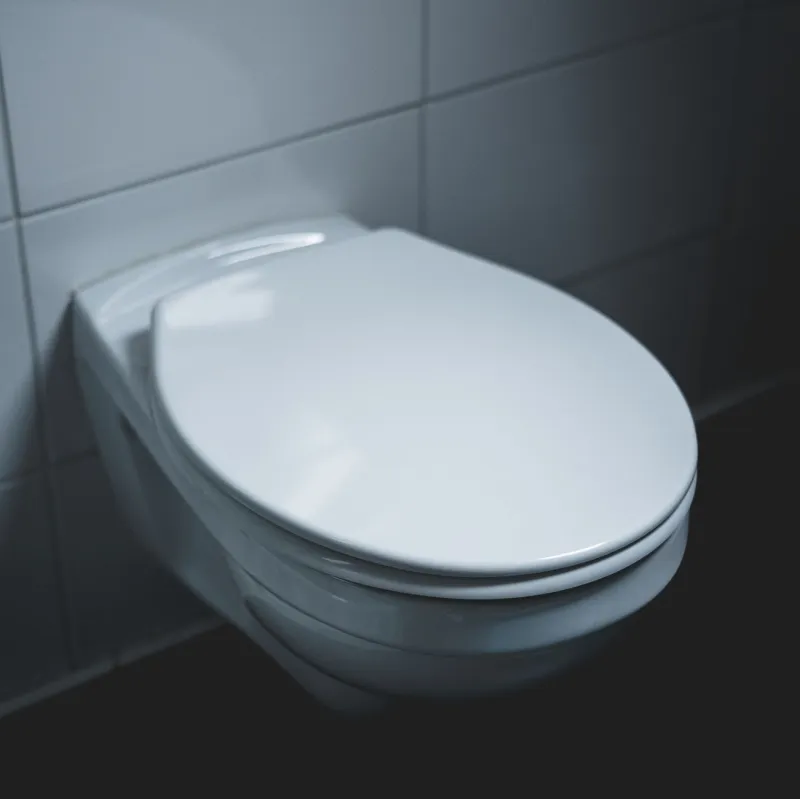
Somewhere in America right now, a couple is arguing about a toilet seat. Not about money. Not about the in-laws. Not about whose turn it is to call the plumber. They are standing in a bathroom at 2 a.m., bleary-eyed and furious, locked in a dispute that has probably been simmering since the second week of cohabitation.
Welcome to the one domestic battlefield that never, ever gets resolved. Here at Squabbles, we've seen people go to the mat over pizza toppings and aluminum foil orientation — but the toilet seat argument? That one hits different. That one is personal.
It Seems Petty. It Is Not Petty.
Let's be clear about something upfront: nobody is actually just mad about a toilet seat. Or rather, they are — but that's not the whole story. The toilet seat is a symbol. It represents whose comfort gets prioritized in a shared space. It represents whether your partner pays attention to the small things. It represents, in the grand emotional economy of a relationship, whether you matter enough for someone to take two seconds out of their day to perform a minor courtesy.
That's a lot of weight for a hinged piece of plastic to carry. And yet, here we are.
According to relationship therapists — yes, actual therapists have weighed in on this — the toilet seat dispute frequently surfaces as a proxy conflict. Couples who can't agree on big things often fight loudest about the small ones. The seat is an easy, concrete grievance in a sea of complicated feelings. It's hard to argue about "feeling unheard." It's very easy to point at an upright toilet seat and say, "See? This. This is what I'm talking about."
The Biological Reality (Which Everyone Ignores)
Here's where things get genuinely interesting. The traditional framing of this debate — women want it down, men couldn't care less — is both accurate and wildly oversimplified.
The case for putting the seat down is, on the surface, pretty logical. Statistically, the majority of bathroom visits for everyone involved require the seat to be in the down position. Women, always. Men, about half the time. So mathematically, "default down" is the more efficient setting. If we're treating the toilet like a shared household appliance — which, to be fair, it absolutely is — then optimizing for the most frequent use case makes sense.
But then there's the hygiene argument, which throws a wrench into everything. Flushing with the lid up — note: the lid, not just the seat — sends a fine aerosol mist of toilet water into the surrounding air. This is called the "toilet plume," and it is exactly as unpleasant as it sounds. If you care about that (and you should, probably), the real answer isn't seat up or seat down. It's lid down, always, for everyone. Which means both parties in the classic argument have been missing the point entirely.
This revelation tends to either end the debate or escalate it dramatically. There is no in-between.
Who Actually Gets to Set the Rules?
Here's where Squabbles readers are going to have opinions, because this gets into genuine relationship territory.
In many heterosexual households, the expectation that the seat should be left down is treated as obvious — as just basic consideration. And there's a reasonable case for that. But flip it around and ask why the burden of adjustment should fall entirely on one person, and suddenly the argument looks a little different. Why is "down" the neutral position? Who decided that?
Some people — and they will say this with complete sincerity — argue that everyone should just look before they sit. Revolutionary concept. Check the seat before committing. This is the libertarian position on toilet etiquette, and it has a certain cold logic to it, even if it will get you absolutely nowhere in an actual relationship conversation.
Others argue that whoever shares the space should share the effort equally: if you moved it to use it, you move it back. This is the contractarian approach, and it sounds fair until 3 a.m. when someone is half-asleep and not doing any kind of ethical reasoning whatsoever.
And then there are households that have simply adopted the full-lid-down rule across the board, removing the gendered dimension entirely and creating a new, bipartisan annoyance that everyone shares equally. Honestly? Relationship goals.
The Squabbles Community Weighs In
We threw this topic into the Squabbles forums — because of course we did — and the responses were, predictably, chaotic.
"My husband and I have been married 22 years. He still leaves it up. I have accepted that I married a feral animal and I love him anyway."
"I live alone and I STILL put it down. It's about discipline."
"The lid argument is the only correct argument and everyone else is having the wrong fight."
"My parents divorced and this was legitimately one of the cited grievances. I grew up understanding the stakes."
"It's a toilet. You look at it before you use it. End of discussion." (This person received 47 downvotes and seemed unbothered.)
What's striking is how quickly people move from "it's just a seat" to full moral conviction. Give it two replies in any thread and someone is talking about respect, consideration, and the fundamental nature of partnership. The toilet seat, it turns out, is a Rorschach test for how you think relationships should work.
What Your Position (Pun Intended) Says About You
If you're a die-hard seat-down enforcer, you probably value systems and shared standards. You believe in proactive consideration — doing the small thing so the other person doesn't have to think about it. You might also, if we're being honest, have a slight tendency toward needing things done your way.
If you're firmly in the "look before you sit" camp, you prize personal responsibility and find it mildly exhausting when other adults expect environmental accommodations for easily solvable problems. You may have been told, at some point, that you have a high tolerance for conflict.
If you've already moved to the full-lid-down household policy, you're pragmatic, you've done your research, and you've figured out that the best way to win an argument is to reframe it entirely. You probably also own a Roomba.
Does It Ever Actually Get Resolved?
Rarely by logic. Usually by one person quietly accepting the other's preference, or by both people developing a habit so automatic they stop noticing. The couples who fight about it the least tend to be the ones who laughed about it the most, early on — who treated it as a funny quirk of sharing space rather than a referendum on their partner's character.
But every so often, someone falls in at 2 a.m., and the whole thing starts over from scratch.
Some battles, it turns out, are just permanent features of domestic life. The toilet seat is less a problem to be solved and more a recurring reminder that love requires negotiating even the smallest, weirdest corners of existence with another human being.
That said — put the lid down. Seriously. The plume is real.