The Period at the End of Your Text Is Starting Fights You Don't Even Know You're In
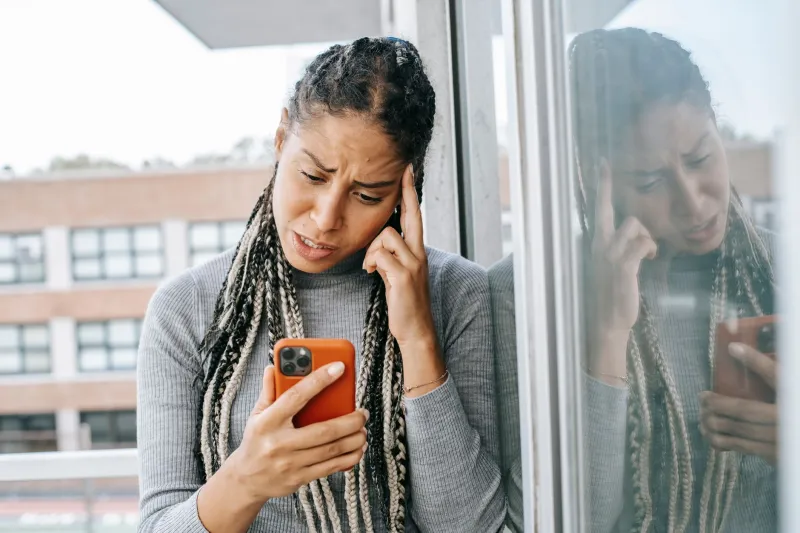
You send a text. It says: "Sounds good."
To you, this is a normal, complete sentence. You used a period because that's what you do at the end of a sentence. Your English teacher would be proud. You hit send and move on with your day.
To the person on the other end — depending on their age and their relationship to digital communication — that period just told them something is very, very wrong.
Welcome to the punctuation wars. They're real, they're generational, and they are absolutely happening in your text thread right now whether you know it or not.
How a Dot Became a Threat
Linguists and communication researchers have actually studied this, which should tell you something about how widespread and genuine the phenomenon is. A 2015 study out of Binghamton University found that text messages ending with a period were perceived as less sincere than those without one. Not more formal. Less sincere. The period, in the context of casual digital messaging, had flipped its meaning entirely.
The reason makes a kind of intuitive sense once you think about it. Texting evolved as an informal medium. Early text messages were short, functional, and typed on number pads where punctuation required multiple button presses. Nobody was adding periods because it was genuinely inconvenient to do so. The absence of a period became the default — the neutral, baseline tone of digital conversation.
So when someone does add a period, it stands out. It signals intentionality. And in a medium where the default is casual and unpunctuated, intentionality reads as weight. As emphasis. As something being communicated beyond the literal words.
For younger users who grew up entirely within this communication culture, "okay" and "okay." are two entirely different messages. One is a casual acknowledgment. The other means you're irritated and the recipient should start preparing their apology.
The Generation That Learned Grammar and Is Not Apologizing
Now let's talk about the people on the other side of this — the ones who are genuinely baffled by all of this and a little bit offended on behalf of the English language.
For Gen X, Baby Boomers, and a significant chunk of older Millennials, the period is not a weapon. It's just punctuation. It means the sentence is over. It has meant that for their entire literate lives. The idea that a grammatically correct sentence is being read as passive-aggressive hostility is, to them, somewhere between absurd and infuriating.
This group often pushes back with a fair point: if we abandon standard punctuation in digital communication, how do we signal actual tone? If a period is aggressive and no punctuation is neutral, what does someone do when they genuinely want to communicate formality or precision? The linguistic tools are being stripped away, and older communicators feel like the rules changed without anyone asking them.
There's also a legitimate frustration about the asymmetry of the situation. The burden of interpretation has shifted entirely onto the sender. You didn't mean anything by that period. You were just being grammatically correct. But you're now responsible for the emotional response it triggered in the recipient. That's a weird place to be, and it's not unreasonable to push back on it.
The Exclamation Point Arms Race
The period drama is just one front in a broader punctuation conflict. Consider what has happened to the exclamation point.
In formal writing, exclamation points are used sparingly for genuine emphasis or excitement. In digital communication — particularly in professional and quasi-professional contexts — they have become the baseline friendliness marker. "Thanks!" reads as warm. "Thanks." reads as cold. "Thanks" with nothing reads as... fine, probably?
This has created a genuinely exhausting dynamic in workplace texting and email, where people — particularly women, who research suggests feel more social pressure to perform warmth in written communication — find themselves peppering messages with exclamation points just to avoid sounding curt. The exclamation point has been devalued by inflation. It no longer signals excitement. It signals that you are a normal, non-threatening person who is not mad at you.
When the exclamation point is the price of admission for seeming friendly, the period becomes the discount — the thing you reach for when you want to subtract warmth. Which is how we got here.
Workplace Texting Is Its Own Special Nightmare
Bring this dynamic into a professional environment and things get genuinely complicated. Slack messages, Teams chats, work texts — these occupy a weird hybrid space between formal written communication and casual conversation, and nobody has agreed on the rules.
A manager who texts "I need to see you in my office." has probably not considered that the period is doing a lot of unintended emotional work on their employee. The employee is now spiraling. The manager is just scheduling a meeting. This mismatch in interpretation has real consequences for workplace relationships and, in some cases, for people's mental health.
Younger employees navigating this often describe a kind of constant low-grade code-switching — adjusting their punctuation based on who they're messaging, trying to read the communication style of each person they interact with, and calibrating their own style to match. It's a social skill that didn't exist twenty years ago, and it takes real cognitive energy.
Older managers, meanwhile, are sometimes completely unaware this dynamic exists. They're writing normally. Their team is reading subtext that isn't there. And nobody is talking about it directly, because that conversation is also somehow awkward.
Can We Actually Fix This
The honest answer is: not really, and probably not soon.
Language evolves. Digital communication has always moved faster than formal grammar conventions, and the meaning of punctuation in informal digital contexts is going to keep shifting. What reads as neutral today might read as something else in ten years. The period's reputation may rehabilitate itself. Or it might get worse.
What can actually help is something deceptively simple: talking about it. If you're in a relationship — romantic, professional, or otherwise — where communication style mismatches are causing friction, naming the thing is usually more productive than either side silently assuming the worst about the other's intentions.
The period-as-aggression crowd could extend a little grace to people who learned to write before texting existed. The grammar-is-grammar crowd could acknowledge that communication norms have genuinely shifted and that intent isn't the only thing that matters — impact matters too.
Or you could just keep fighting about it in the comments.
This is Squabbles. We know which option you're going to pick.
And honestly? We respect it.