Turn Them On or Turn Them Off: The Caption War Splitting Every Streaming Household
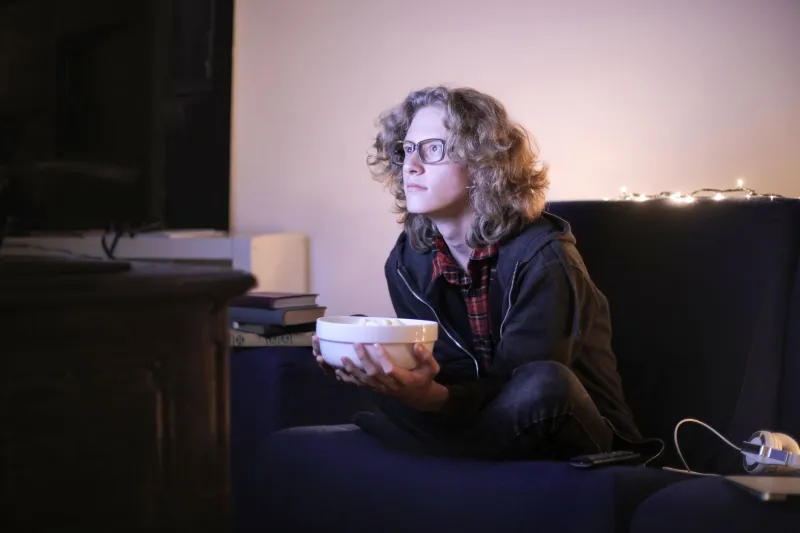
It starts innocently enough. You settle into the couch, queue up something on Netflix, hit play — and then it happens. Either a cascade of white text floods the bottom of the screen, or the screen stays clean and caption-free. Depending on which camp you're in, that moment either feels like sweet relief or a minor act of aggression.
Welcome to one of the quietest but fiercest squabbles happening in living rooms across America right now. The closed caption debate has arrived, it is not leaving, and it has strong opinions about your personality.
The People Who Will Fight You for That Toggle
Caption defenders are not messing around. For a significant chunk of viewers — whether they're hard of hearing, dealing with auditory processing differences, watching in a noisy apartment, or just genuinely struggling to understand what actors are mumbling — captions aren't a preference. They're the whole ballgame.
And honestly? The numbers back them up. According to various streaming platform surveys, somewhere between 50 and 80 percent of caption users don't actually have a diagnosed hearing impairment. They're using captions because modern TV mixes dialogue so low against thundering background music that you'd need the ears of a golden retriever to catch every line without help. Hollywood's obsession with cinematic sound design has accidentally made captions a practical necessity for a huge chunk of the population.
Add in the reality of American households — barking dogs, kids running through the kitchen, a partner who won't stop asking questions during the show — and suddenly that little text crawl at the bottom becomes your best friend.
The People Who Find Them Genuinely Unbearable
On the other side of this couch, you've got the caption resisters. These are the folks who will physically flinch when captions pop on. And before you dismiss them as elitist about their viewing experience, hear them out for a second.
The argument isn't really about snobbery. It's about immersion. When you're deep in a tense scene — a slow-burn thriller, a quiet emotional moment, a horror movie building toward something terrible — and the text at the bottom reads "[OMINOUS MUSIC INTENSIFIES]" or spoils the next line of dialogue before the actor even delivers it, something breaks. The spell is gone. The caption resisters aren't wrong that this is a real phenomenon; they're just maybe being a little dramatic about how catastrophic it is.
There's also the genuine reading-ahead problem. Some people's eyes are simply drawn to text. They can't help it. The caption is there, their brain reads it, and now they're half a beat ahead of the actual scene. For those viewers, captions don't clarify the experience — they fracture it.
The Generational Fault Line Nobody Expected
Here's where it gets genuinely interesting from a cultural standpoint: this debate maps almost perfectly onto a generational divide, and not the one you'd expect.
Younger viewers — Gen Z in particular — have normalized captions in a way that genuinely baffles older generations. Part of this is TikTok culture, where auto-captions became standard and watching video without text started feeling incomplete. Part of it is that Gen Z grew up consuming content on phones in loud environments, in bed with a sleeping roommate nearby, or with the volume low so parents wouldn't hear them up at midnight. Captions were the workaround that became the default.
Boomers and Gen X, meanwhile, often associate captions with accessibility tools that weren't meant for them — a holdover from a time when closed captions were a separate, slightly clunky feature you had to specifically activate rather than something streaming platforms surface automatically. For them, turning on captions still carries a faint implication that something is wrong, either with their hearing or with the TV setup.
Millennials? Completely split down the middle, which is extremely on-brand for millennials.
The Household Negotiation Nobody Prepared You For
The real squabble happens when two people with opposing caption preferences share a screen. This is, to put it mildly, a situation.
Couples have genuinely reported this as a recurring source of friction. One person needs the captions; the other finds them distracting. One person grew up in a house where the TV was always loud and captions were never a thing; the other grew up watching foreign films with subtitles and now can't imagine life without text on screen. Neither person is unreasonable. Both people are completely certain the other person is being unreasonable.
The compromise options are limited and unsatisfying. You could split the screen with one person watching on a tablet with headphones — which sounds fine until you realize you're now watching TV separately while sitting next to each other, which is its own kind of sad. You could try to find a middle ground on caption style (some streaming services let you shrink text or change opacity, which helps a little). Or you could just have the same argument every single time you start a new show.
Many households, it turns out, are choosing option three.
Why This Actually Matters Beyond the Couch
Zoom out a little and the caption debate is really about something bigger: how we design shared experiences for people with genuinely different needs, and whether accessibility features should be treated as defaults or add-ons.
The fact that streaming platforms are still not great at this — inconsistent captioning quality, fonts that clash with the content, captions that cover crucial visual information on screen — is a legitimate complaint that both sides of this debate can actually agree on. Bad captions hurt everyone. Good captions, well-designed and thoughtfully placed, bother almost nobody.
But until the platforms get their act fully together, the caption toggle is going to keep sitting there like a tiny grenade at the start of every movie night. Someone's going to reach for the remote. Someone's going to have feelings about it.
And somewhere on Squabbles, someone is going to start a thread about it that hits 400 comments by midnight.
Turn them on. Turn them off. Just know that whatever you choose, you've already told everyone in the room something about yourself.