The Blinker Is a Promise, Not a Contract: Inside America's Most Awkward Parking Lot Standoff
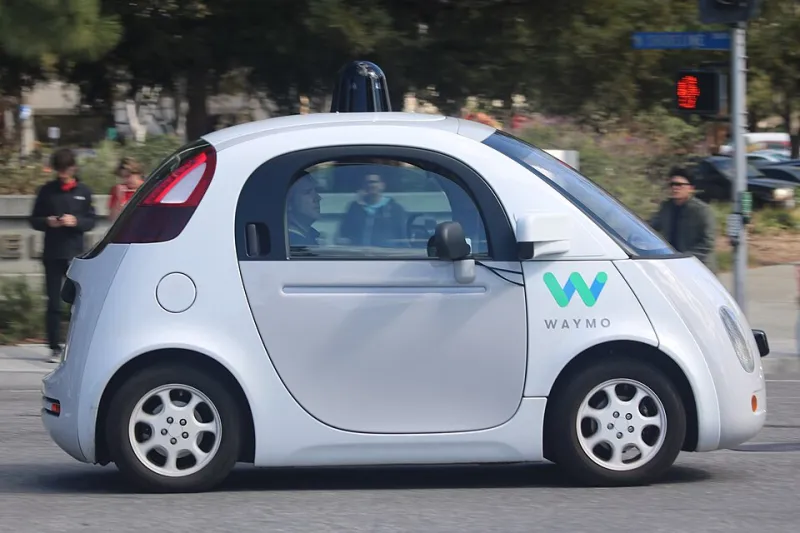
Photo: Grendelkhan, CC BY-SA 4.0, via Wikimedia Commons
You are in the Trader Joe's lot on a Saturday morning, idling in second gear, when you see them: a couple pushing a cart toward a silver CR-V, keys already out. You flip the turn signal. Somewhere behind you, another driver spots the same taillights and does the same thing. Congratulations. You have just entered the least regulated, most emotionally loaded negotiation in American public life.
There is no referee in a parking lot. There is no rulebook taped to the light pole. There is a blinker, a brake light, and whoever has the stronger commitment to being a problem.
The Negotiation Nobody Signed Up For
Here is what makes the parking standoff so strange: everybody involved knows exactly what is happening and nobody will say a word about it. You have claimed the spot with a signal, which is legally meaningless and socially enormous. The person loading groceries knows you are waiting, which means they now have to perform 'loading groceries' under observation, which makes them slower, which makes you feel insane.
Meanwhile a third car has appeared from the opposite direction, doing the slow creep, pretending to scan for a spot while very clearly waiting for yours. The blinker is on. The blinker is also, in the mind of that other driver, a suggestion.
And then there is the pedestrian walking down the center of the aisle at the pace of a strolling toddler, plus a shopping cart abandoned at a 45-degree angle to the universe. It is a full production.
So How Long Is Actually Legitimate?
This is the question that starts the real arguments. Everyone seems to have an internal clock and nobody's matches.
The loose consensus — and we mean loose — runs roughly like this. If the taillights flash and the car starts moving within about 60 to 90 seconds, you are solidly within your rights. Once you are past two or three minutes with zero movement, you are no longer waiting for a spot. You are loitering with intent.
Past five minutes, you have become a landmark. People are navigating around you the way you would navigate around a broken-down sedan. You are no longer a driver. You are infrastructure.
The disputed territory lives in the middle. Two minutes of somebody buckling a toddler into a car seat is not a crime — that is just parenting in a parking lot, which is its own endurance event. Two minutes of somebody sitting in the driver's seat scrolling their phone while the frozen stuff melts in the trunk is a different thing entirely, and everybody in the aisle knows it.
The Phantom Reverse Light
Then there is the betrayal. You know the one.
The reverse lights go white. Your heart lifts. You inch forward, waving off the car behind you with that little apologetic hand gesture we all use for reasons we cannot explain. And then the car does not move. Or it rolls back three feet and stops. Or the driver gets out, walks to the trunk, and starts rearranging coolers.
A reverse light is the closest thing the parking lot has to a signed contract. When somebody flashes it and then just sits there, that is not a delay. That is a breach. Somewhere in the back of your mind, a tiny lawyer wakes up.
Worse is the driver who backs halfway out, sees you waiting, and then announces with a hand wave that they are actually going to pull forward and re-park. In that moment you learn something about your own capacity for patience. Usually it is less than you thought.
Claim or Threat?
This is where the Squabbles readership splits down the middle, and honestly, both sides have a point.
The claim camp says the blinker is a civilized reservation — the parking equivalent of draping your jacket over a chair at a wedding. You saw it first, you signaled your intent, and everyone else should respect that. Under this theory, the guy who circles twice and slides in from the far end of the aisle is not clever. He is the parking lot equivalent of cutting the buffet line.
The threat camp says the blinker is a courtesy notification, and courtesy does not come with property rights. Nobody owns the spot until their bumper crosses the line. Under this theory, the blinker is basically a wish, and wishes do not hold up in court.
Both camps agree on one thing: the driver who accelerates into a space they never waited for is the villain of the story. The entire fight is about what happens in the gray zone.
The Archetypes, Ranked
We asked readers to name the worst characters in the lot. The results were not close, and several people appeared to have been saving up for this question for years.
- The Shadow — never signals, follows you for two aisles, peels off the instant you commit. No commitment, no blame.
- The Two-Spot Squatter — parked across the line in a full lot. This person has never once apologized for anything.
- The Searched Everywhere Else First — walks out with one bag, gets in, then sits for four minutes answering texts.
- The Phantom Reverse — backup lights, zero movement. Possibly a psychological experiment.
- The Cart Returner — morally superior, taking 90 seconds to walk the cart back. You cannot be mad. You want to be mad.
- The Circler — laps the lot three times, cuts in from the far row, ends up with your spot. Unbothered. Unstoppable.
- The Honest Waiter — signals from a respectful distance, waits patiently, gets the spot. Rare. Cherish them.
The One Rule Everyone Agrees On
If there is a consensus, it is this: the wait should be visible and the claim should be honest. Signal early, do not crowd the bumper, do not lean on the horn, and if somebody has clearly been waiting longer than you, let it go. None of this is enforceable, which is exactly why it feels so personal when someone breaks it.
The parking lot is a low-stakes society with no police and a surplus of opinions. Which is basically the whole premise of this website.
So: how long do you wait before you become the problem? The comment section is open, and it is going to be a mess.