Your Phone Is Not the Show: The Concert Screen War Nobody Is Winning
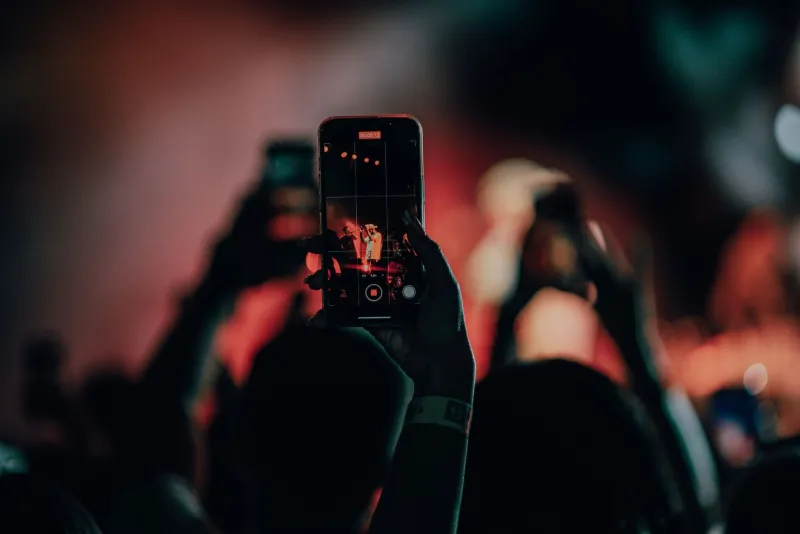
Let's set the scene. You've waited six months for this night. You snagged tickets the second they dropped, paid a convenience fee that made you briefly question your life choices, and now you're finally here — standing in the crowd, the bass thumping through your chest, your favorite artist about to walk on stage. Magic, right?
Then the phone goes up. Not just one phone. A forest of them. Screens everywhere, arms extended, some with selfie sticks tall enough to qualify as a structural hazard. And suddenly you're not watching a concert — you're watching a hundred people watch a concert through a three-inch rectangle.
This is the fight. And it's not going away anytime soon.
The Case for Filming (Yes, There Is One)
Before everyone who's ever held up a phone at a show gets publicly shamed, let's be fair. The instinct to capture a moment isn't new, and it isn't evil. People have been sneaking disposable cameras into venues since before smartphones were a thing. The desire to hold onto a memory — especially one you worked hard and paid a lot to experience — is deeply human.
For some people, filming is part of how they process an experience. They watch the footage back later, share it with friends who couldn't make it, or just keep it as a personal record. A shaky, thirty-second clip of their favorite song isn't ruining your night — it's preserving theirs. And for fans of artists who rarely tour or perform certain deep cuts, that footage can feel genuinely irreplaceable.
There's also the social reality that if you're at a major cultural moment — a surprise guest appearance, a reunion tour, a once-in-a-generation performance — the internet is going to want proof. Posting that clip isn't narcissism. Sometimes it's just participation in the larger conversation around an event.
The Case Against (And It's a Strong One)
Okay, but here's the thing: there's a significant difference between a quick clip and a full three-song recording session with your arm raised at maximum height directly in someone else's sightline.
The selfie stick is where most people draw the line, and honestly, it's hard to argue with them. A selfie stick at a concert isn't just a personal choice — it's a physical intrusion into the shared space of everyone around you. It's the acoustic equivalent of setting up a lawn chair at a standing-room-only show. You've essentially claimed airspace that wasn't yours to claim.
Beyond the physical obstruction, there's something deeper going on. When half the crowd is watching through screens, it changes the energy of the room. Artists notice it. Other attendees feel it. Live performance is, at its core, a shared communal experience — a rare moment where a group of strangers agrees to be fully present in the same space at the same time. Introducing a wall of glowing screens into that equation shifts the vibe from "we're all in this together" to "we're all content creators competing for the same angle."
Taylor Swift's Eras Tour famously had fans debating this endlessly. Beyoncé's Renaissance shows had entire Reddit threads about people blocking views with extended arms. It's not a fringe complaint anymore. It's the dominant conversation happening in venues across the country.
Where Venues and Artists Are Landing
Some performers have decided they're done waiting for audiences to self-regulate. Jack White banned phones entirely at his shows years ago, requiring fans to lock their devices in Yondr pouches at the door. Alicia Keys has done the same. Smaller comedy clubs have been using phone-free policies for even longer, arguing that the presence of recording devices kills the spontaneity that makes live performance worth attending in the first place.
Audiences at those shows? Largely positive reviews. People report feeling more connected to the performance, more present, less anxious about capturing the perfect clip. There's something almost radical about being forced to just... watch.
But not every artist can pull that off, and not every venue wants to deal with the logistics. For most concerts, the policy is still essentially "please don't be a jerk about it," which, as we all know, is not an enforceable standard.
The Unspoken Rules Nobody Actually Agrees On
Here's where the squabble really lives — in the gray zone where etiquette is implied but never stated.
Most people would agree that filming for a couple minutes is fine. Most people would also agree that a selfie stick blocking three rows of sightlines is not fine. But the middle ground? That's where it gets messy.
Is it okay to film the whole song if you're in the back row? What about if you're short and you have to raise your arm to see over the crowd anyway? Does it matter if you're at a stadium show versus an intimate club? Is there a time limit on how long your arm can be up before someone's allowed to say something?
Nobody has agreed on any of this. And the fact that nobody has agreed is exactly what makes it such fertile ground for conflict. It's not a legal issue. It's a social contract issue — and those are always the messiest kind.
The Real Tension Underneath All of This
At its core, this debate isn't really about phones. It's about what we think public shared spaces are for, and who gets to define the rules inside them.
The person filming believes they have a right to document their own experience. The person behind them believes they have a right to an unobstructed view of the thing they paid to see. Both of these positions are reasonable. Both of them cannot fully coexist in a crowded venue.
That's the actual squabble. Not phones versus no phones. It's individual expression versus collective experience — a tension that shows up everywhere in American culture right now, from airplane armrests to neighborhood noise ordinances, and apparently, to every concert floor in the country.
So next time you're at a show and the person in front of you raises their selfie stick like they're planting a flag on the moon, maybe take a breath before you say something. Or don't. Either way, the argument is going to keep going long after the encore ends.
The show, unfortunately, must go on.